Dairyland Power Cooperative members receive renewable energy from two landfill gas-to-energy (LGE) biogas facilities. Nearly 12,000 homes in Dairyland’s service territory can be powered by the two LGE power plants.
LGE plants turn something negative—methane gas—into something positive that we all need: renewable energy. The plants are also very efficient power producers, and don’t come with concerns about fuel supply. It’s unlikely landfills will ever run out of garbage!
How does it work?
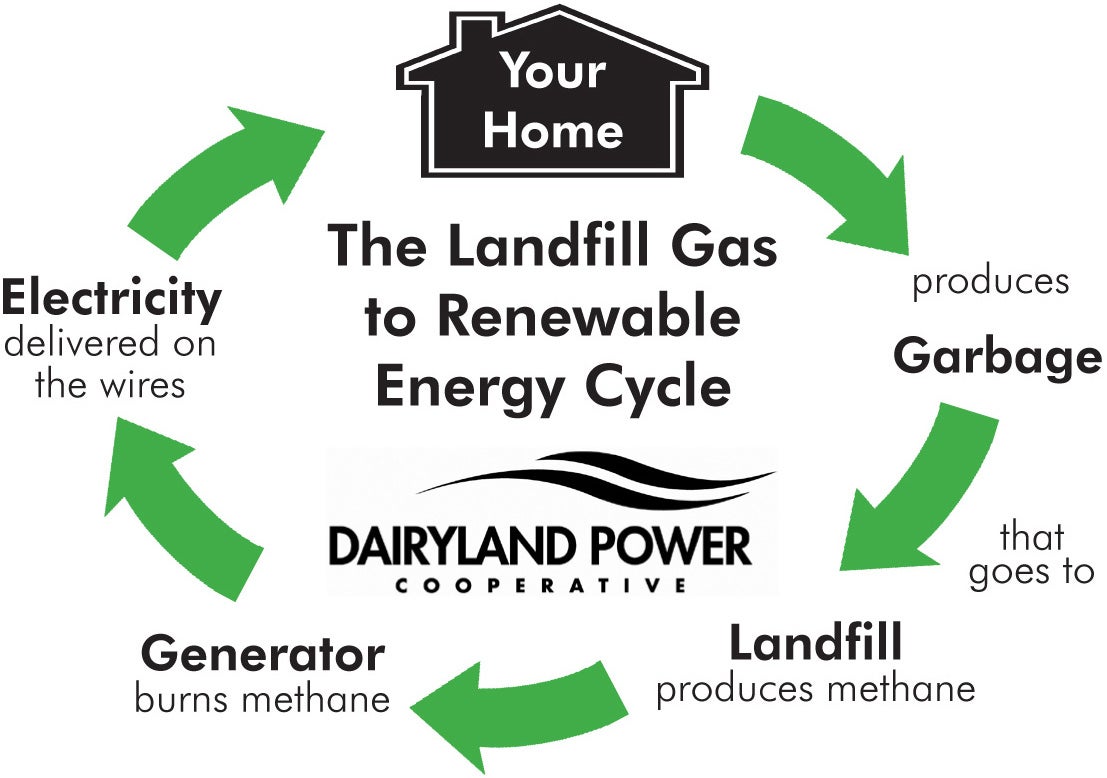
The process from curbside garbage to green energy is simple in concept. The trash you put out on the curb is collected and sent to a landfill. As the trash decomposes, it produces methane gas. This natural byproduct of garbage decomposition is the fuel used to generate renewable energy. An LGE facility harnesses the methane gas to power the generators, which create electricity that is sent to the consumers whose trash began the cycle.
Landfill-to-Gas Generating Stations
The natural byproduct of the residential waste landfills, methane gas, is the fuel used to generate renewable energy at each site
 Central Disposal Landfill Generating Station (Lake Mills, Iowa)
The 4.8 MW Central Disposal landfill gas-to-energy (LGE) generating facility can power 4,000 homes. Dairyland Power Cooperative purchases the renewable energy from the owner of the landfill, Waste Management, Inc.
Central Disposal is located near Lake Mills, Iowa. The LGE plant came online in spring 2006.
Timberline Trail Landfill Generating Station (Bruce, Wis.)
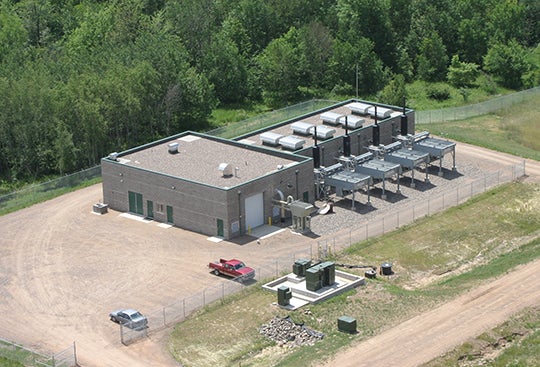 The 5.6 MW Timberline Trail landfill gas-to-energy (LGE) generating facility can power 4,660 homes. Dairyland Power Cooperative purchases the renewable energy from the owner of the landfill, Waste Management, Inc.
The Timberline Trail Landfill Generating Station is located near Bruce, Wis. The LGE plant came online in spring 2006.